

The idea of acquiring an aging aircraft and monetizing it for parts is compelling. When the sum of an aircraft’s components exceeds its value as a whole flying machine, a tear-down strategy seems like a straightforward path to significant returns. Many owners, seeing this arbitrage opportunity, assume they can manage the process themselves, treating it like a complex mechanical project rather than what it truly is: an institutional asset disposition.
In practice, attempting to execute an aircraft tear-down independently is nearly impossible. Without the right infrastructure, regulatory knowledge, and global network, an owner will find themselves with an expensive, non-compliant pile of parts generating no return.
The reality is that successful part-out strategies do not happen in isolation. They operate within sophisticated partnership frameworks. The owner remains the asset stakeholder, but the execution—the disassembly, certification, marketing, and monetization—is handled by a team of specialized institutional players. Understanding this ecosystem is the key to unlocking the true value of an end-of-life aircraft.
Why You Can’t Go It Alone
Before exploring the types of partners involved, it is critical to understand the barriers that make a solo tear-down unfeasible. The process is far more than just taking an airplane apart with a set of tools. It is governed by strict regulations and complex logistics that demand an established infrastructure.
The Regulatory Wall
Every component removed from an aircraft must carry full trace documentation, often back to its original date of manufacture, to be reintroduced into the aviation marketplace as a serviceable part. This involves FAA Form 8130-3 airworthiness tags in the U.S. and equivalent documentation in other jurisdictions. Without this “birth certificate,” a part is considered scrap. Regulatory compliance also involves adhering to specific protocols for disassembly, condition verification, and preservation. A single misstep can render a million-dollar engine worthless.
The Logistical Machine
Beyond the regulatory layer sits a massive logistics machine. Where will you store hundreds or thousands of parts, from large engine nacelles to tiny avionics boxes? How will you finance the inventory while you wait for it to sell? Who will manage the global distribution and broker relationships needed to move those components? Without an established ecosystem for warehousing, financing, and sales, an owner’s capital remains trapped in non-performing inventory.
Because of these immense challenges, the smart strategy is not to build this infrastructure yourself, but to partner with those who already have it.
The Key Players in a Tear-Down Partnership
A successful tear-down is a collaborative effort between the asset owner and several institutional specialists. Each partner plays a distinct and vital role in the monetization process.
1. Certified Tear-Down Facilities
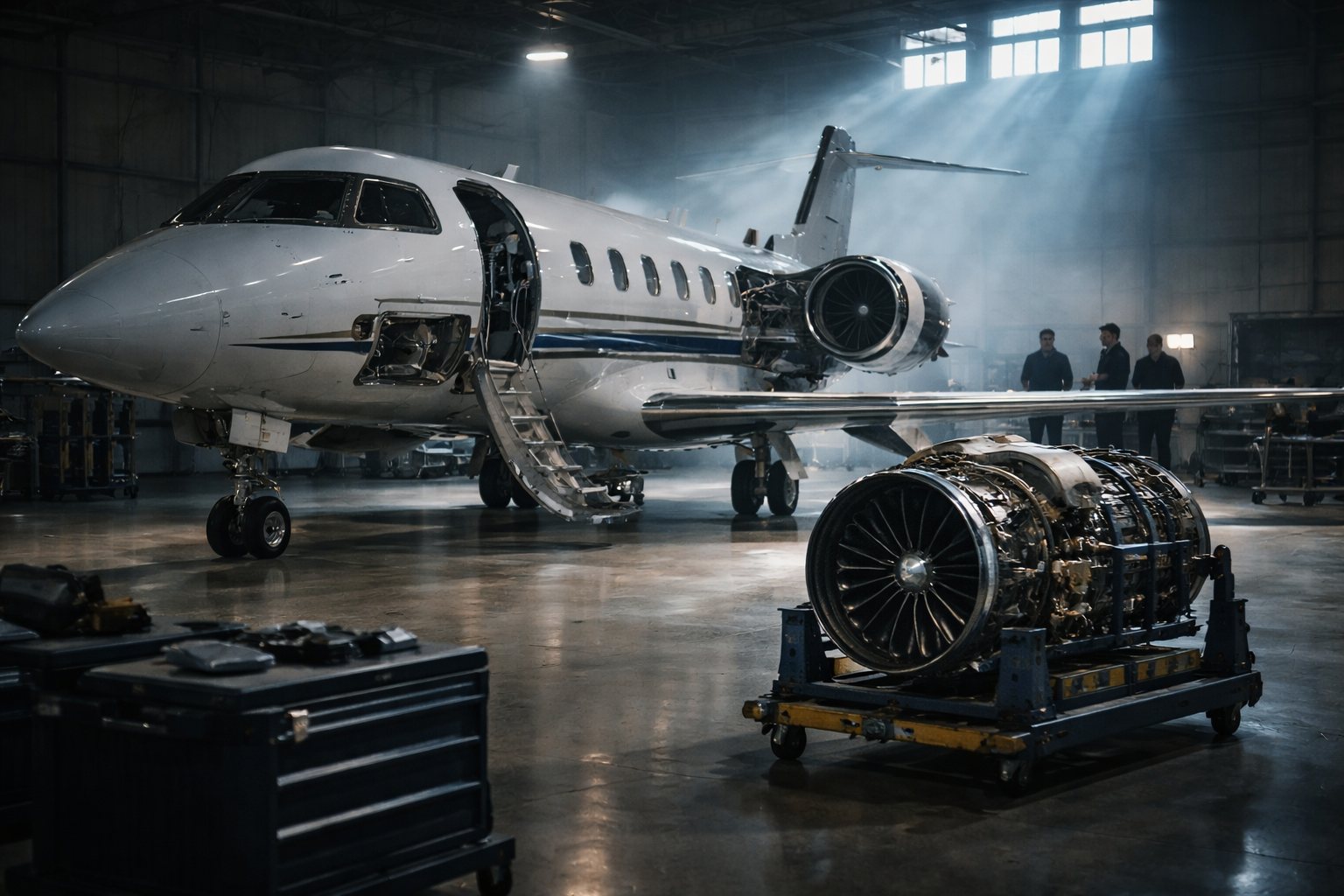
This is where the physical work begins. Aircraft disassembly cannot happen in any local hangar. It must be performed at a certified repair station operating under strict regulatory oversight (e.g., FAA Part 145). These facilities have the tooling, expertise, and approved processes to take an aircraft apart correctly, ensuring that each component is removed without damage and its traceability is maintained. They are the first and most critical link in the chain of custody that preserves a part’s value.
2. Maintenance Program Providers
Groups like JSSI, the engine and airframe program providers, play a crucial role long before the tear-down begins and are invaluable during the process. They hold the complete maintenance pedigree of enrolled engines and other major components. Their records validate the quality of work performed over the aircraft’s life, its operational history, and its remaining economic utility. When it comes time to sell a parted-out engine, the history from a program provider acts as an institutional seal of approval, giving parts buyers the confidence they need and commanding a higher price.
3. Global Parts Distributors
These are the sales and marketing engines of the tear-down economy. Companies like Aviall or an AAR Corp have vast inventory databases, established global broker networks, and direct relationships with the operators and MROs who are the end-users of these parts. They understand market demand, pricing trends, and how to position components for a quick sale. An owner attempting to sell parts on their own is a single voice shouting into the void; a distributor has a megaphone connected to the entire industry.
4. Asset Managers and Financiers
Finally, specialized asset managers often structure the financial side of the tear-down. They forecast recovery values, manage the timing of cash flows, and arrange the deal structure between the owner and the other partners. They provide the financial modeling that justifies the part-out decision in the first place. In some cases, inventory financing structures can be put in place where capital is advanced to the owner against the projected parts recovery, providing immediate liquidity while the components are sold over time.
Structuring the Partnership
These partnerships are not one-size-fits-all. The deal structure is tailored to the specific aircraft, the owner’s financial goals, and the risk tolerance of each party. Common arrangements include:
- Revenue Sharing Agreements: The tear-down partners and the owner agree to share the revenue generated from parts sales according to a pre-defined split. This model aligns incentives, as all parties benefit from maximizing the total recovery value.
- Consignment Resale Agreements: The owner consigns the inventory to a parts distributor, who then sells the components over time and takes a commission on each sale. The owner retains ownership of the parts until they are sold.
- Guaranteed Minimums: In some cases, a partner might offer a guaranteed minimum recovery threshold. This de-risks the owner’s downside by providing a value floor, with potential upside participation if the parts sell for more than the guaranteed amount.
The key takeaway is that the owner is not expected to become a parts broker, a logistics manager, or an inventory financier. The owner’s role is to be the asset stakeholder. The institutional partners provide the specialized expertise and infrastructure required to execute the disassembly, certification, marketing, and monetization strategy.
Without that ecosystem in place, a tear-down is not a strategy—it is just an airplane in pieces sitting in a hangar, losing value every day. For any owner contemplating the end-of-life options for their aircraft, the first step is not to call a mechanic. It is to start a conversation with the institutional partners who can turn that aging metal into a structured financial return.
Take Control of Your Aircraft’s Future
Don’t leave your aircraft’s end-of-life decisions to chance. Partnering with the right experts can mean the difference between financial loss and significant returns. At VREF Online, we provide the insights, tools, and network you need to make informed decisions and maximize the value of your aging aircraft.
Subscribe to VREF Online today and gain access to industry-leading resources, market intelligence, and a community of professionals ready to help you turn challenges into opportunities.
Click here to start building a plan for your aircraft’s future today.