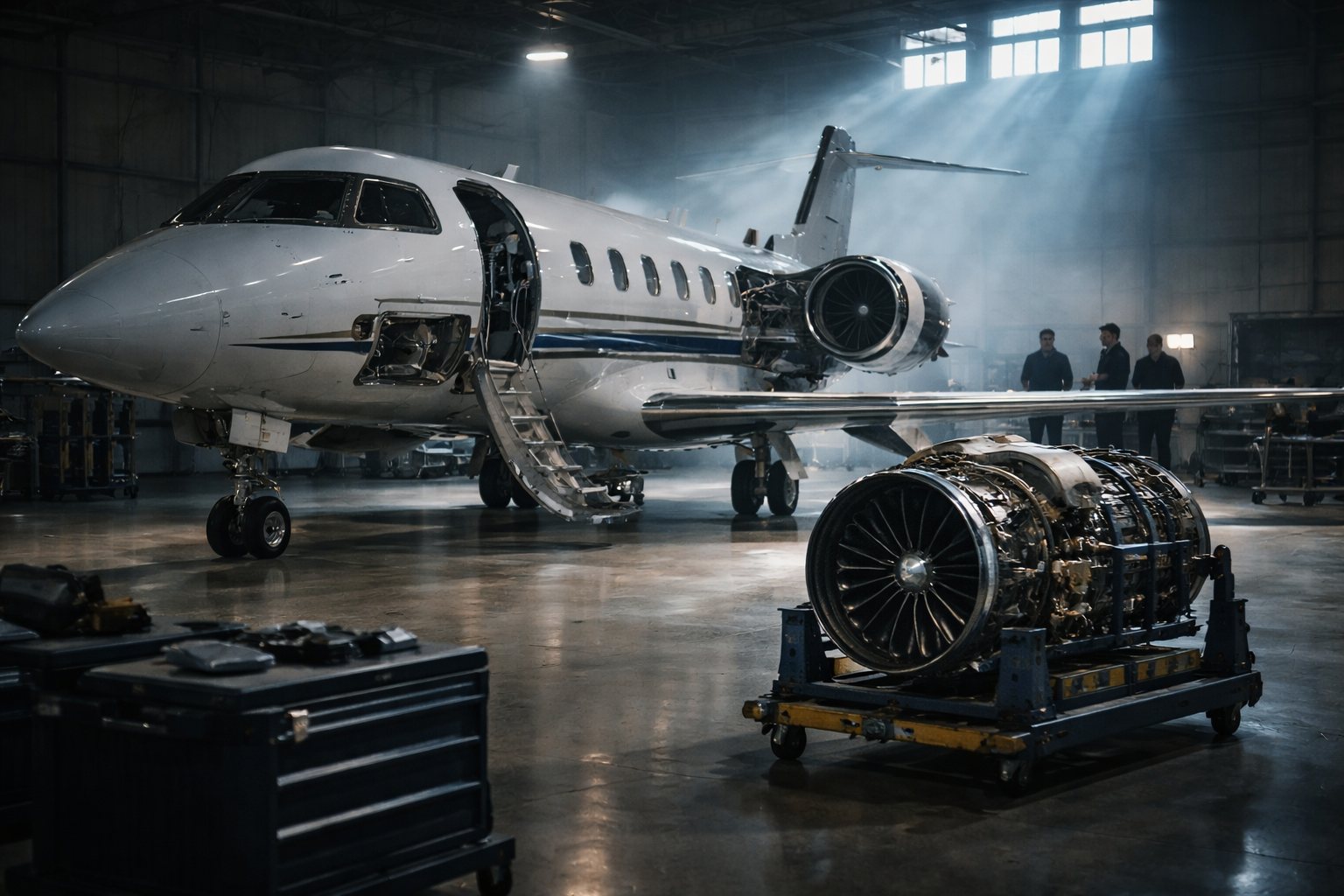

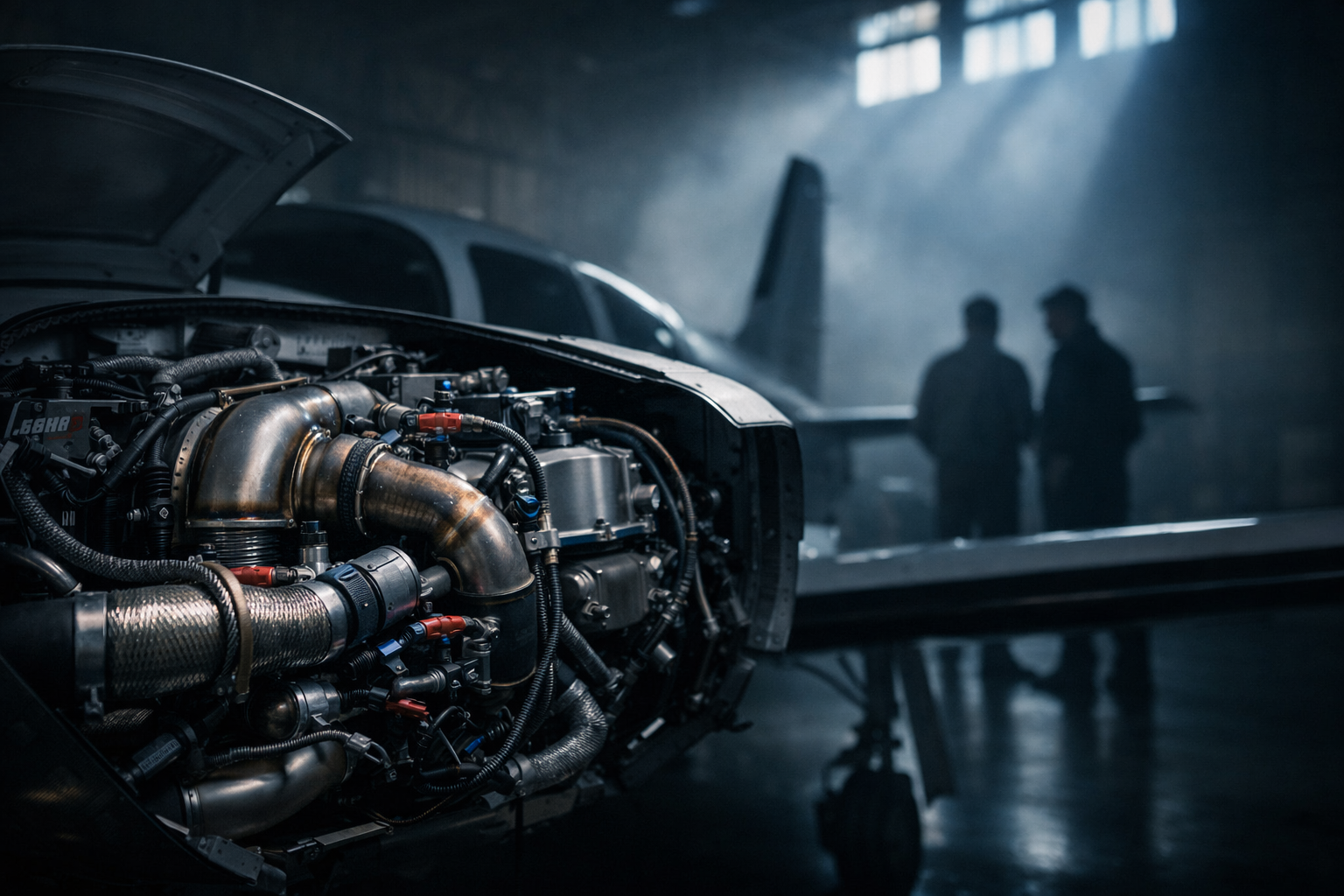
The phrase “unleaded transition” sounds clean and modern. It suggests progress. But for a specific segment of the general aviation fleet, it sounds more like an expensive engineering problem.
While the FAA and industry groups frame the move away from 100 Low Lead (100LL) as a manageable inevitability, the physics of combustion tell a sharper story. Not all piston engines are created equal. The vast majority of the fleet—the low-compression, naturally aspirated engines found in Skyhawks and Cherokees—will likely transition with minimal drama.
But for the high-performance segment—the turbocharged, high-compression workhorses that power serious cross-country aircraft—the stakes are entirely different. These engines live on the edge of detonation by design. Removing lead doesn’t just change the fuel; it removes the primary safety margin that keeps them running.
The Margin of Safety
To understand the risk, you have to understand why lead is there in the first place.
In aviation, lead is not just an octane booster. It is a specific, highly effective detonation suppressant. In high-performance engines, cylinder pressures and temperatures spike violently during combustion. Lead slows the flame front propagation, smoothing out the explosion and preventing the fuel from detonating spontaneously before the spark plug fires.
This protection is critical during high-stress phases of flight:
- Takeoff: Maximum power, maximum heat generation.
- Climb: High power settings in thinning air where cooling efficiency drops.
- High-Altitude Cruise: Turbochargers compressing thin air, keeping manifold pressures high even as ambient pressure drops.
For decades, lead provided a wide buffer. It allowed engineers to design engines that squeezed maximum performance out of air-cooled cylinders without relying on the liquid cooling or computer-controlled timing found in cars. When that buffer disappears, the margin for error evaporates.
The Pressure Points: Engines in the Danger Zone
The phase-out of 100LL does not affect the fleet evenly. The pressure points are specific, and they are located under the cowlings of the most capable—and expensive—piston aircraft in the sky.
The most vulnerable engines are the high-compression, turbocharged variants. These powerplants require 100-octane fuel not as a suggestion, but as an operational necessity.
Continental TSIO-520 and TSIO-550 Series
These are the heavy lifters of the fleet. Found in high-performance singles like the Cirrus SR22, Beechcraft Bonanza, and Mooney Ovation/Acclaim, as well as twins like the Baron, these engines produce tremendous power per cubic inch.
- The Risk: They run hot and hard. Without the detonation suppression of lead, these engines face increased cylinder head temperatures (CHTs) and a higher likelihood of detonation events under high load.
- The Consequence: Owners may see reduced Time Between Overhaul (TBO) and increased frequency of top overhauls as cylinders degrade faster under thermal stress.
Lycoming TIO-540 Variants
The turbocharged 540 is legendary for its use in heavy haulers like the Piper Navajo, Saratoga, and Malibu/Mirage series. These engines are often tasked with lifting heavy airframes to flight levels where the air is thin and cooling is critical.
- The Risk: Operating at high manifold pressure at altitude places extreme stress on internal components. Lead has historically protected valves and seats from recession and mitigated the heat spikes of turbocharging.
- The Consequence: A shift to unleaded fuels without sufficient octane or protective additives could lead to accelerated valve seat recession, requiring expensive cylinder work long before TBO.
The Hidden Costs of Heat
The risk isn’t necessarily that engines will explode the moment unleaded fuel hits the injectors. The failure mode is likely to be economic degradation rather than sudden mechanical catastrophe.
Detonation vs. Degradation
Massive detonation events are obvious and destructive. But the more insidious threat is incipient detonation—mild, chronic detonation that doesn’t immediately destroy a piston but hammers away at engine internals over time. This increases heat, stress, and wear.
Valve Seat Recession
Lead acts as a lubricant for exhaust valves and seats. In older, air-cooled engines designed with softer metallurgy, the removal of lead can cause the valve to grind into the seat, leading to compression loss and the need for premature cylinder replacement. While newer engines have hardened seats, the legacy fleet—the ones holding their value based on their utility—is largely composed of older metallurgy.
Reduced TBOs
If an engine that historically made TBO at 2,000 hours suddenly starts needing top overhauls at 1,200 hours due to thermal stress, the cost of operation skyrockets. The reserve fund you set aside for overhaul is no longer sufficient. The asset becomes a liability.
What This Means for Value
If you own or are looking to buy an aircraft with one of these high-performance engines, the calculus has changed.
Historically, a high-time engine was a known quantity. You deducted the overhaul cost from the purchase price and moved on. Now, you must factor in uncertainty.
- Will this engine require modification to run safely on unleaded alternatives?
- Will the STC (Supplemental Type Certificate) for new fuels be expensive?
- Will the resale value of the airframe drop if the engine is deemed “fuel sensitive”?
The market is already beginning to filter aircraft based on fuel compatibility. Aircraft that can easily digest unleaded fuel (lower compression, modern designs) are seeing value stability. Those that require 100LL to survive are facing a narrower buyer pool and potentially steeper depreciation curves.
Don’t Guess—Verify Your Value
The transition away from lead is rewriting the rules of aircraft ownership. If you own a high-performance piston aircraft, or if you are in the market for one, you cannot afford to rely on generic “Blue Book” numbers or outdated assumptions. You need to know exactly how your specific engine configuration impacts the asset’s long-term value.
VREF Online provides the aviation industry’s most defensible, condition-adjusted valuations. Our platform doesn’t just look at make and model; it allows you to configure for engine time, modifications, and market trends, giving you a clear picture of where your aircraft stands in a changing world.
Stop guessing about your engine’s impact on value.
Sign up for a VREF Online and Get Defensible Aircraft Valuation Data Today